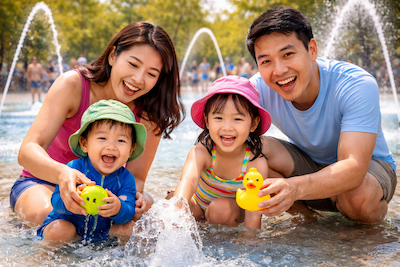
Your Toddler's First Splash Pad: What to Expect and How to Prepare
Your toddler's first splash pad visit is one of those parenting moments that can go either way. Some kids sprint into the sprinklers like they've been waiting their whole lives for this. Others take one look at the water jets and decide they'd rather observe from a safe distance — ideally from behind your legs.
Both reactions are completely normal. And with a little preparation, you can set up a first visit that works regardless of where your toddler lands on the splash pad enthusiasm spectrum.
Here's everything you need to know.
What Age Can Toddlers Start at Splash Pads?
Most splash pads are safe for children who can walk steadily — typically around 12-18 months. Ground-level splash pads with zero standing water are ideal for this age because there's no drowning risk from pooled water. The water jets spray up from the ground and drain immediately.
That said, every child develops differently. Some 10-month-olds are confident walkers who love water. Some 2-year-olds are cautious and prefer to watch first. There's no wrong age to start — just match the splash pad's intensity to your child's comfort level.
A good rule of thumb: If your toddler can walk independently on a wet surface without falling constantly, they're ready for a gentle splash pad.
Choosing the Right Splash Pad for a First Visit
Not all splash pads are created equal for toddlers. For a first visit, look for:
Gentle Features
Avoid splash pads where the primary features are high-pressure jets, dumping buckets, or water cannons. These are exciting for older kids but can overwhelm or frighten a toddler on their first visit. Look for facilities with:
- Low ground-level bubblers and gentle spray nozzles
- A variety of water intensities (so your toddler can choose their comfort level)
- Separate toddler areas away from the high-energy zones
Small to Medium Size
A massive splash pad with 50 features and 200 kids is sensory overload for a first timer. A smaller neighborhood splash pad with a handful of features and fewer crowds gives your toddler space to explore at their own pace.
Good Sightlines
Choose a splash pad where you can see the entire play area from wherever you're sitting. Toddlers wander, and you need to be able to track them without obstacles blocking your view.
Restrooms and Shade
Practical but important. A first visit with a toddler involves diaper changes, outfit changes, and shade breaks. Having restrooms and a shaded area nearby makes everything easier.
Find toddler-friendly splash pads near you →
What to Bring
Pack more than you think you need. Toddler splash pad visits involve a surprising amount of gear for what seems like a simple activity.
The Essentials
- Swim diaper — regular diapers absorb water and become waterlogged. Reusable swim diapers are more comfortable and cost-effective for repeat visits
- Swimsuit or quick-dry clothes — a rash guard with UPF protection doubles as sun protection
- Sunscreen (SPF 50+) — apply 15-20 minutes before water exposure and reapply every 90 minutes
- Water shoes — splash pad surfaces get hot in direct sun and can be slippery when wet. Flexible water shoes with grip protect little feet
- 2-3 towels — one is never enough with a toddler
- Change of dry clothes for the ride home
Nice to Have
- A portable shade tent or large umbrella — for breaks and gear storage
- Snacks in sealed containers — water play is tiring and hungry-making
- A waterproof bag for wet clothes after
- A favorite small toy — having something familiar can help a hesitant toddler feel more comfortable near the water
- An extra set of clothes for you — toddlers have a way of pulling parents into the splash zone
What to Expect: The First Visit
The Assessment Phase (5-15 minutes)
Most toddlers don't run straight into the water. They stand at the edge, watching. They study the jets, watch other kids, and try to figure out what's happening. This observation period is important — they're building a mental map of the space and deciding whether it feels safe.
What to do: Don't rush them. Sit near the edge with them. Let them watch. Narrate what's happening: "Look, that water goes up and comes back down. That little girl is walking through it." This builds familiarity without pressure.
The Approach (varies)
Once they're ready, most toddlers approach the water cautiously. They might:
- Touch the edge of a puddle with one foot
- Reach a hand toward a low bubbler
- Follow an older child who looks like they're having fun
- Walk toward you if you've positioned yourself near a gentle feature
What to do: Position yourself near the gentlest feature on the splash pad. If you're standing in or near the water, your toddler is more likely to come to you. Let them come at their own pace.
The Reaction
This is where it gets unpredictable:
The Enthusiast: Some toddlers immediately love it. They'll splash, stomp, run through sprayers, and try to eat the water (they all try to eat the water). Your job is just to stay close and let them explore.
The Cautious Explorer: Many toddlers will engage slowly. They'll play with the edges — puddles, gentle bubblers, water that pools in low spots. They may not go near the big features on the first visit, and that's perfectly fine. The edges are where the best toddler play happens.
The Observer: Some toddlers decide that watching is enough for today. They'll sit on your lap near the splash pad and watch other kids play. This is not a failed visit — it's exposure. Many toddlers who observe on visit one are splashing confidently by visit three.
The Nope: A small number of toddlers will be frightened by the noise, the crowds, or the unpredictability of the water. If your toddler cries and wants to leave, leave. Don't force it. Come back another day when it's less crowded, or try a different splash pad with gentler features. Forcing a scared toddler into water creates negative associations that are hard to undo.
Safety Tips for Toddlers at Splash Pads
Stay Within Arm's Reach
Even though splash pads have no standing water, toddlers can still slip on wet surfaces and hit their heads, or wander toward areas with more intense water features. Stay close enough to catch them if they fall.
Watch for Hot Surfaces
Metal splash pad features and surrounding concrete can get scorching hot in direct sun. Touch surfaces with your hand before letting your toddler sit or play on them. Water shoes help, but hot metal nozzles can still burn bare skin.
Manage Sun Exposure
Toddlers burn faster than adults. Apply sunscreen before you leave the house, reapply after water exposure, and take shade breaks every 30-45 minutes. A rash guard with UPF 50 protection reduces the surface area you need to cover with sunscreen.
Hydration
Toddlers don't always tell you they're thirsty, especially when they're having fun. Offer water every 20-30 minutes. Signs of overheating in toddlers include flushed cheeks, crankiness, and reduced energy.
The Drinking-the-Water Issue
Your toddler will try to drink the splash pad water. Every toddler does. Splash pad water is typically treated and recirculated, but it's not drinking water. Redirect them to their water bottle when you see it happening, but don't panic — a few sips won't cause harm in most cases.
How to Build Splash Pad Confidence Over Multiple Visits
The first visit sets the foundation. Here's how to build from there:
Visit the same splash pad 2-3 times before trying a new one. Familiarity builds confidence. Your toddler will remember the layout, the features, and the routine, which frees them to explore further each time.
Go during off-peak times. Early morning (right at opening) and late afternoon are less crowded. Fewer kids means less noise, more space, and less overwhelm for a toddler who's still building comfort.
Let them lead. Resist the urge to carry your toddler to the "fun" features. Let them choose where to go and what to explore. The developmental value of splash pad play comes from self-directed exploration, not guided activities.
Celebrate small wins. If your cautious toddler touched a bubbler today when they wouldn't go near one last week, that's progress. Name it: "You touched the water! That was brave." Positive reinforcement builds the confidence loop.
When to Go Home
Toddler splash pad visits have a natural arc: excitement, exploration, peak fun, and then a rapid decline into overtired crankiness. The sweet spot for most toddlers is 30-60 minutes of active play.
Watch for these signs that it's time to wrap up:
- Rubbing eyes or ears
- Increased clumsiness (more falls than usual)
- Cranky behavior that wasn't there 10 minutes ago
- Saying "up" or wanting to be held constantly
- Shivering (even on warm days, wet toddlers can get cold)
Leave before the meltdown, not during it. A visit that ends on a positive note makes the next visit easier.
The Big Picture
Your toddler's first splash pad visit isn't about maximizing play time or making sure they use every feature. It's about creating a positive first association with water play in a safe, zero-pressure environment.
If they splash for an hour — great. If they watch from your lap for 20 minutes and then want to go to the playground instead — also great. The splash pad will be there next week, and the week after that.
The best first visits are the ones where your toddler leaves thinking: "I'd like to go back."