Sensory-Friendly Splash Pads: What to Look For and How to Plan a Successful Visit
Water play is one of the richest sensory experiences available to children. The temperature of the water, the sound of the sprayers, the feeling of wet ground underfoot, the unpredictability of timed jets — for most kids, this combination is thrilling. For children with sensory processing differences, it can be overwhelming, frightening, or deeply uncomfortable. But here's the thing: it can also be profoundly calming, regulating, and joyful. Many occupational therapists use water play as a therapeutic tool precisely because water provides deep sensory input that helps regulate the nervous system. The key isn't avoiding splash pads — it's finding the right one, visiting at the right time, and giving your child the tools to engage on their own terms. This guide is for parents and caregivers of children with autism spectrum disorder (ASD), sensory processing disorder (SPD), or other sensory sensitivities who want to include splash pads in their child's summer but need a plan. --- ## Why Splash Pads Can Be Hard for Sensory-Sensitive Kids Understanding the specific sensory challenges helps you plan around them. ### Sound
Splash pads are loud. Water hitting concrete, children screaming with excitement, the mechanical hum of pumps, and the whoosh of pressurized jets create a cacophony that can overwhelm a child with auditory sensitivity. The sound is also unpredictable — a jet might activate suddenly, or a dumping bucket might crash without warning. ### Touch
Water temperature, texture, and pressure vary across a splash pad. Ground surfaces change from dry to wet to slippery. Some children find the sensation of water hitting their skin from unexpected angles distressing, especially if they're sensitive to light touch or have tactile defensiveness. ### Visual
Splash pads can be visually busy — moving water, flashing reflections, crowds of children running in every direction. For a child who is visually overstimulated easily, this environment can be difficult to process. ### Unpredictability
Many splash pad features are timed or sensor-activated, meaning they turn on and off without warning. For children who rely on predictability and routine to feel safe, this randomness is the hardest part. --- ## What to Look For in a Sensory-Friendly Splash Pad Not all splash pads are created equal for sensory-sensitive visitors. Here's what to look for: ### Gentle, Low-Pressure Features
Avoid splash pads where the primary attractions are high-pressure jets, water cannons, and dumping buckets. Look for facilities with:
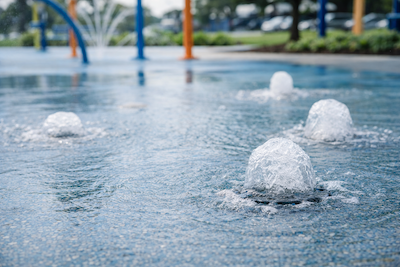
- Ground-level bubblers that gurgle rather than spray
- Misting arches that provide soft, diffuse water contact
- Water tables or shallow channels where children can touch water on their own terms
- Adjustable or variable-intensity features ### Separate Zones
The best splash pads for sensory-sensitive children have distinct areas — a gentle toddler zone separated from the high-energy main area. This allows your child to engage with water at a lower intensity while other children play more aggressively nearby. ### Open Sight Lines
A splash pad with clear sight lines lets your child see the entire space from the edge before entering. Enclosed or maze-like layouts can feel claustrophobic and unpredictable. Open, circular, or fan-shaped designs give sensory-sensitive children a sense of control over the space. ### Low Crowd Density
This is less about the facility and more about when you visit (covered below), but splash pads in smaller community parks tend to draw fewer visitors than flagship facilities. A neighborhood splash pad with 5 other families is a completely different sensory experience than a regional park with 50. ### Shade and Quiet Areas
A shaded retreat area adjacent to the splash pad gives your child a place to decompress without leaving entirely. Being able to step into shade, sit on a dry bench, and watch from a distance before re-engaging is critical for sensory regulation. ### Predictable Features
Splash pads with continuously running features (always-on sprayers, steady bubblers) are more predictable than those with timed or sensor-activated jets. If you can find a facility where the water features run steadily rather than cycling on and off, the sensory experience is more manageable. Find accessible splash pads near you → --- ## How to Plan a Sensory-Friendly Visit ### Scout the Location First
Visit the splash pad without your child the first time. Walk through it, note the noise level, identify the gentlest features, find the shade areas, and plan your approach. Take photos or a short video to show your child before the visit — visual previews reduce anxiety about new environments. ### Visit During Off-Peak Hours
This is the single most impactful thing you can do. The sensory difference between a splash pad at 9am on a Tuesday and 1pm on a Saturday is enormous. Early morning visits (right at opening) and late afternoon visits (after 5pm) on weekdays offer the lowest crowds, least noise, and most space. ### Create a Visual Schedule
For children who respond well to visual supports, create a simple picture schedule for the visit:
1. Drive to the splash pad
2. Put on water shoes and sunscreen
3. Walk to the edge and watch
4. Touch the water (when ready)
5. Play in the gentle area
6. Take a break in the shade
7. Play more (if desired)
8. Dry off and change clothes
9. Drive home Having a predictable sequence helps children feel in control of an otherwise unpredictable environment. ### Bring Comfort Items
Water shoes provide a consistent tactile sensation underfoot. Swim goggles reduce water-in-the-eyes anxiety. Ear defenders or earplugs reduce auditory input. A familiar toy provides grounding. These aren't crutches — they're tools that lower the sensory threshold enough for your child to engage. ### Start at the Edges
Don't walk your child into the center of the splash pad. Start at the perimeter where the water is lightest — puddles, gentle runoff, the outer edge of a misting arch. Let your child choose when and how to move closer. The edges of a splash pad are where the best sensory-friendly play happens. ### Respect the "No"
If your child doesn't want to enter the water today, that's a successful visit. Exposure to the environment — the sounds, the sights, the proximity to water — is valuable even if they don't get wet. Forcing entry creates negative associations. Watching from a shaded bench for 20 minutes and then leaving is progress. ### Plan the Exit
Know your child's signs of sensory overload and have an exit plan ready. When you see early warning signs (covering ears, stimming increases, seeking physical closeness, withdrawal), transition out calmly rather than waiting for a meltdown. A positive exit preserves the possibility of a positive return visit. --- ## Sensory Strategies That Help at Splash Pads ### Deep Pressure Before and After
Many occupational therapists recommend deep pressure input before and after sensory-stimulating activities. A tight bear hug, compression vest, or even a snug swimsuit can help organize the nervous system before entering a high-sensory environment. After leaving, a warm towel wrap provides calming deep pressure. ### Ear Protection
If auditory sensitivity is the primary challenge, swim-friendly earplugs or ear defenders can reduce the noise level dramatically without eliminating it entirely. Your child can still hear you and engage with the environment while filtering out the loudest frequencies. ### Gradual Exposure Over Multiple Visits
Don't expect the first visit to be the best visit. Many sensory-sensitive children need 3-5 exposures to a new environment before they feel comfortable enough to fully engage. The first visit might be watching from the car. The second might be walking to the edge. The third might involve touching the water. Progress is cumulative. ### Use Water Temperature as a Tool
Cool water can be alerting and organizing for some children while distressing for others. If your child is sensitive to cold, visit during the warmest part of the day when the water has been heated by the sun. If your child seeks sensory input, cooler morning water may be more regulating. --- ## Facilities Designed for Inclusion A growing number of splash pads are being built with inclusive design principles from the start. These facilities feature: - ADA-compliant surfaces that accommodate wheelchairs and mobility devices
- Adjustable water features that can be activated by hand rather than by stepping on sensors
- Sensory-calm zones with gentle water features separated from high-intensity areas
- Visual and tactile cues built into the ground surface to help children navigate the space
- Family restrooms with changing areas that provide privacy The inclusive play movement has significantly influenced modern splash pad design. When browsing our directory, look for facilities tagged as "Accessible" — these are more likely to have features that accommodate sensory-sensitive visitors. --- ## The Bigger Picture Water play is one of the most developmentally valuable activities available to children. It builds motor skills, provides sensory regulation, encourages social interaction, and creates joy. Children with sensory differences deserve access to these experiences just as much as any other child. The right splash pad, visited at the right time, with the right preparation, can become one of the most positive environments in your child's summer. It might take a few tries. It might look different from how other families use the space. That's perfectly fine. The goal isn't to get your child to use every feature on the splash pad. The goal is to help them find their own way into the water — at their pace, on their terms. --- This article is for informational purposes only and is not intended as therapeutic or medical advice. If you have concerns about your child's sensory processing, consult an occupational therapist who specializes in pediatric sensory integration. Find accessible splash pads near you →